Category Archives: Group Meetings

What we discuss during cake at our Tuesday afternoon group meetings

ISMB 2018 (Chicago): Summary of Interesting Talks/Posters

Catherine’s Selection

Network approach integrates 3D structural and sequence data to improve protein structural comparison

Why: Current graph mapping in protein structural comparison ignores sequence order of residues. Residues distant in sequence but close in 3D space are more important.
How: Introduce sequence order of residues, set a sequence-distance cutoff to consider structurally important residues, count the graphlet frequency and embed into PCA space.
Results: the new method is predictive of SCOP and CATH ‘groups’. Certain graphlets are enriched in alpha and beta folds.
Link: https://www.nature.com/articles/s41598-017-14411-y

Investigating the molecular determinants of Ebola virus pathogenicity

Why: Reston virus is the only Ebola virus that is not pathogenic to human
What they do: multiple sequence alignment to look for specificity determining positions (SDPs) using s3det, then predict the effect of each individual SDP on the stability of the protein with mCSM.
Results: VP40 SDPs alter octamer formation, structure hydrophobic core. VP24 SDPs leads to impair binding to KPNA5 in human, which inhibits interferon signalling.
Impact: only a few SDPs distinguish Reston VP24 from VP24 of others. Human-pathogenic Reston viruses may emerge.
Link: https://www.ncbi.nlm.nih.gov/pmc/articles/PMC5558184/#__ffn_sectitle

Computational Analysis Highlights Key Molecular Interactions and Conformational Flexibility of a New Epitope on the Malaria Circumsporozoite Protein and Paves the Way for Vaccine Design

Why: An antibody with a strong binding affinity was found in a group of subjects. This antibody prevents cleavage of the surface protein.
What they do: They found the linear epitope, crystallise the strong and medium binders and run a molecular dynamic simulation to find out the flexibility of the structures.
Results: The strong binder is less flexible. Moreover, the strong binder is similar to the germline sequence which may mean that this antibody could have been readily formed.
Link: https://www.nature.com/articles/nm.4512


Matt’s Selection

“Analysis of sequence and structure data to understand nanobody architectures and antigen interactions”
Laura S. Mitchell (Colwell Group)
University of Cambridge, UK

This poster detailed the work from Laura’s two most recent publications, which can be found here: https://doi.org/10.1002/prot.25497, https://doi.org/10.1093/protein/gzy017

They describe a comprehensive analysis of the binding properties of the 156 non-redundant nanobody-antigen (Nb-Ag) complexes in the PDB/SAbDab (October 2017). Their analyses include Nb sequence variability (both global and across the binding regions), contact maps of nanobody-antigen interactions by region, and the typical chemical properties of each paratope. Nb-Ag complexes are compared to a reference set of monoclonal antibody-antigen (mAb-Ag) complexes. This work is a key first step in advancing our understanding of Nb paratopes, and will aid the development of new diagnostics and therapeutics.

OSPREY 3.0: Open-Source Protein Redesign for You, with Powerful New Features”
Jeffrey W. Martin (Donald Group)
Duke University, USA

OSPREY 3.0 (https://www.biorxiv.org/content/early/2018/04/23/306324) represents a large advance towards time-efficient continuous flexibility modelling of protein-protein interfaces.

Its new algorithms LUTE and BBK* allow for continuous rotamer flexibility searching and entropy-aware binding constant approximation in a much more efficient manner. The CATS algorithm also introduces local backbone flexibility as a long-awaited feature. This software now has a easy-to-use Python interface, and is fully Open-Source, making it an extremely attractive alternative to other proprietary protein design tools.

“Functional annotation of chemical libraries across diverse biological processes”
Scott Simpkins
University of Minnesota-Twin Cities, USA

This interesting talk detailed the work published in Nature Chemical Biology in September 2017 (https://doi.org/10.1038/nchembio.2436).

310 yeast gene-deletion mutants were isolated to perform chemical-genetic profile studies across six diverse small molecule high-throughput screening libraries. By studying which gene-deletion mutants were hypersensitive or resistant to each compound, the researchers could assign most members of each chemical library a probable functional annotation. Mapping back to gene-interaction profile data also allowed them to infer likely targets for some compounds. The GO annotations associated with these genes could then be used assess whether a given starting library is likely to contain promising starting-points that affect a given biological function. For example, the authors highlighted a deficiency across all libraries against the cellular processes of cytokinesis and ribosome biogenesis. Conversely, they found a large enrichment across all libraries for compounds likely to affect glycosylation or cell wall biogenesis. Compounds that target transcription and chromatin organisation were found to be enriched in certain datasets, and depleted in others. This genre of profiling provides researchers a way of judging a priori whether a given screening library is likely to contain promising lead compounds, given the functional role of the target of interest.

Protein Engineering and Structure Determination

Sometimes it can be advantageous to combine two proteins into one. One such technique was described by Jennifer Padilla, Christos Colovos, and Todd Yeates back in 2001 (Padilla, et al., 2001). By connecting two proteins, one that dimerized, and another that trimerized, they were able to design synthetic ‘nanohedra’. The way they achieved this was by extending a C-terminal α-helix at the end of one protein by another α-helix ‘linker’, directly into the N-terminal α-helix of another protein:

Continue reading

Prague Protein Spring 2018

We, Constantin and Dominik, the newest members of OPIG (SABS rotation students, as usual) were lucky to have a conference suitable to our research within our rotation period and, granted an allowance from the powers that be, were able to visit this year’s Prague Protein Spring with the topic ‘Proteins at Work’. There, we spent four busy but very inspirational days with about 50 participants in a little palace, the Vila Lanna.

The general topic of this meeting led to a broad variety of talks representing a multitude of fields of protein research: from origins of life, over fuzzy intrinsically disordered proteins and crowded cells to metagenomics and functional sequence alignment annotation.

We picked four thought engaging talks to present at the group meeting on 08/05/2018; here are their summaries:

Protein engineering and in vitro evolution studies for the origins of life

Kosuke Fujishima from Tokyo Institute of Technology presented several examples of the research he conducts in the area of origins of life. Research on the origins of life are generally based around the questions how prebiotic monomers were created, how they condensed into polymers and how functionality emerged within these polymers.

The first example of his research deals with the condensation of prebiotic monomers on the ocean-earth crust-interface. Water cycling between the ocean and the outer layers of the earth’s core provided an environment of high pressure and high temperatures (80 – 200 °C) which is necessary for amino acid polymerisation. The mineral Olivine was found to attract amino acids to its surface and the serpentinisation reaction happening with Olivine might provide the necessary wet/dry cycle. Therefore, the researchers built a reactor aiming to investigate this potential polymerisation mechanism. They found that with providing six prebiotic amino acids, 28 out of 36 possible dipeptides could be found in the reactor. Furthermore, up to 10-mer linear polypeptides could be detected as well, providing evidence for a mechanism of early earth’s generation of polypeptides [unpublished].

The second project showed that both enzymes, CysE/CysK, responsible for the current production of cysteine from serine, could be re-engineered to contain no cysteine in their sequence. Interestingly, cysteine-free CysE showed higher reaction rates than the wild type. Additional reduction to cysteine- and methionine-free enzyme sequences only worked for CysE but not for CysK.[Fujishima et al. (2018)] Still, the experiments indicate that an enzyme world could have existed with a reduced number of amino acids compared to the 20(+) amino acids that we know today.

The third project we wanted to point out used a type of mRNA display that not only links the genotype (mRNA) with its corresponding phenotype (translated protein) but also allows the translated protein to interact with a randomised, non-translated part of the mRNA. This provided a framework for investigating the evolution of ribonucleotide-binding (RNP) proteins. When selecting for ATP-binding, it was observed that protein together with RNA had the best fitness landscape compared to protein selection or RNA selection alone. Further analysis revealed that most binding affinity of the ribonucleotide protein stemmed from its RNA part.[unpublished] These results give rise to the suggestion that RNA and proteins co-evolved, opposing the idea of a pure RNA world.

RNA-protein interactions and the structure of the genetic code

The next speaker added more to the research area of RNA-protein interaction and evolution. Bojan Zagrovic from the University of Vienna presented his research around the finding that pyrimidine (PYR) density of RNA regions is correlated with the corresponding protein region’s affinity to pyrimidine-containing bases (running means of 21 amino acids or 63 bases were used), with the highest correlation between mRNA PYR density and guanine affinity, having an average ‘typical’ Pearson correlation coefficient of 0.80.[Polyansky & Zagrovic (2013)]

This correlation is specific for the current genetic code, shown by random generation of genetic codes which could not reproduce such a correlated behaviour and by looking into three organisms with very different codon usage bias (homo sapiens, E. coli, M. jannaschii). Even though the three averages of codon usage were very different, the highest correlating pairs of mRNA and cognate proteins clustered together, having very similar codon usage. This was also true for the worst correlating pairs.[Hlevnjak & Zagrovic (2015)]

But the big question being: what does this correlation imply functionally?

Annotation analysis revealed that the highest correlating pairs were enriched in nucleotide-binding functions and intrinsically disordered proteins. Without claiming generalisability, Professor Zagrovic pointed out a case study done on RNA polymerase II which has a long disordered C-terminus build up by 26 repeats of a 7 amino acid motif. 248 RNAs were found to interact with RNA polymerase II and in all three reading frames of the interacting RNAs, amino acid codons of the polymerase’s C-terminus were enriched.[unpublished]

This indicates some regulation over gene expression but also several other hypotheses were made: the correlation between the protein regions’ affinity for their cognate mRNA regions might be relevant in virus assembly, since coding RNA and translated proteins have to be in close proximity with each other. The same could be true for some non-membrane-bound compartments, e.g. P-bodies. Or is this correlation characteristic a hint to mRNAs acting as chaperones for their respective proteins? The functional implications of this correlation, while highly speculative, nevertheless suggest exciting research to come in the future.

Fuzziness in protein assemblies

Research from a different, but equally thought provoking field was presented by Mónika Fuxreiter from the University of Debrecen. Her talk on the concept of fuzziness in protein complexes, which she introduced 10 years ago [Tompa & Fuxreiter (2008)], shed light on some more recent developments in the field as well as explaining the underlying concept for those of us (ourselves included) who have not encountered the concept as such before.

Fuzziness in the context of protein complexes describes a phenomenon in which intrinsically disordered proteins, instead of folding upon binding as one would usually observe, can sample several conformational states with different propensities, leading to the sampled states contributing with different strengths to the function of the protein complex and further leading to varying degrees of disorder in the bound state.

This observation has several implications for the understanding of the functionality of disordered proteins, since the relative propensity for different ensemble states in the bound form is thought to be highly susceptible to milieu influences, such as tissue specific splicing and post-translational modifications. Fuzziness (a term that was borrowed from the mathematical theory of fuzzy sets) could thus be a driver of functional adaptability of disordered proteins to cell-cycle stage, environmental influences or tissue type.

Evidence for fuzziness has been curated by the Fuxreiter group since 2015 [Miskei et al. 2017] in the FuzDB database and recently been used to develop a prediction algorithm [unpublished], that according to Professor Fuxreiter achieves highly accurate predictions of fuzziness on a comprehensive validation dataset.

Both the implications of fuzziness for the understanding of the mode of action for disordered proteins (and disordered regions in otherwise ordered proteins) certainly spiked our interest, not least due to the potential importance of a clear understanding of these mode of actions for drug development.

Investigation of mutually exclusive splicing events using the CATH FunFam framework

The last of the 4 talks we would like to single out in this blogpost highlighted recent progress in using structure-based databases for the investigation of complex cellular events.

Christine Orengo from UCL presented her group’s work on mutually exclusive splicing, which employed the FunFam framework of the CATH database to probe the structural and functional implications of these splicing events [Lam et al. (2018), under review].

The FunFams are a subcategory of CATH’s homologous superfamilies, which further divides the superfamilies based on clusters of residue conservation within each family, thus creating groupings of functionally related proteins [Rentzsch & Orengo (2013)].

Mutually exclusive splicing that were investigated using this framework are a group of splicing events in which only one of several specific exons is present in the spliced mRNA. These exons usually show a high level of sequence similarity, leading to a low disruption of the protein structure by the splicing event. It is thought that this feature is a reason for the relative enrichment of mutually exclusive exons amongst alternative splicing events in the proteome.

This high degree of sequence similarity further enabled the mapping of the mutually exclusive exons to FunFams in the CATH database and thus further onto protein structures. This allowed the Orengo group to conduct a ‘large scale systematic study of the structural/functional effects of MXE splicing’.

Their analysis found that variable residues between the exons are significantly enriched at the protein surface, both compared to other stretches of the protein sequence and compared to non-variable residues in the exons, and in close proximity (< 6 Angstroms) to functional sites of the protein.

The main conclusion drawn from these findings was that, as previously hypothesised, mutually exclusive exons are likely functional switches, since changes in the surface exposed area close to functional sites are likely to affect the protein function without strongly disrupting its structure.

In the eyes of the Orengo group, this makes these splicing events good candidates for drug targeting, particularly in cases where a tissue specific isoform can be drugged, since in that case off-target effects could potentially be significantly reduced.

Sources:

Fujishima et al. (2018). Reconstruction of cysteine biosynthesis using engineered cysteine-free enzymes. Scientific Reports

Hlevnjak & Zagrovic (2015). Malleable nature of mRNA-protein compositional complementarity and its functional significance. Nucleic Acids Res

Lam, S. D., Orengo, C., & Lees, J. (2018). Protein structure and function analyses to understand the implication of mutually exclusive splicing. BioRxiv

Miskei, M. et al (2017). FuzDB: Database of fuzzy complexes, a tool to develop stochastic structure-function relationships for protein complexes and higher-order assemblies. Nucleic Acids Research

Polyansky & Zagrovic (2013). Evidence of direct complementary interactions between messenger RNAs and their cognate proteins. Nucleic Acids Res

Rentzsch, R., & Orengo, C. A. (2013). Protein function prediction using domain families. BMC Bioinformatics

Tompa, P., & Fuxreiter, M. (2008). Fuzzy complexes: polymorphism and structural disorder in protein-protein interactions. Trends in Biochemical Sciences
 

The Ten Commandments of OPIG

In OPIG one must learn, and one must learn FAST! However, sometimes stupidity in OPIG knows no limits (*cough* James *cough* Anne *cough*), so for the newer (and prospective) members of the group, I thought it wise to share the some ground rules, a.k.a. The Ten Commandments of OPIG.

Vaguely adhering to these will drastically improve your time in OPIG (see Exhibit A), and let’s face it, none of them are particularly challenging.

  1. No touchy the supervisor.
  2. No touchy other students.
  3. You’re not late unless you’re after Charlotte. Don’t be late.
  4. All prizes are subject to approval by The Party.
  5. Thou shalt not tomate.
  6. Any and all unattended food is fair game.
  7. Meetings (especially the one before yours) will go on as long as they have to.
  8. Finish your DPhil or die.
  9. This is not a democracy.
  10. NO TOUCHY THE SUPERVISOR!

Bonus (and final rule). If this is your first time at Group Meeting, you have to present (well at least introduce yourself).

P.s. we’re not that bad, I promise!

Disclaimer: while I’ve categorised this post as “humour”, I take no responsibility for your enjoyment.

My experience with (semi-)automating organic synthesis in the lab

After three years of not touching a single bit of glassware, I have recently donned on the white coat and stepped back into the Chemistry lab. I am doing this for my PhD project to make some of the follow-up compounds that my pipeline suggests. However, this time there is a slight difference – I am doing reactions with the aid of a liquid handler robot, the Opentrons. This is the first encounter that I have with (semi-)automated synthesis and definitely a very exciting opportunity! (Thanks to my industrial sponsor, Diamond Light Source!)

A picture of the Opentrons machine I have been using to do some organic reactions. Picture taken from https://opentrons.com/robots.

Opentrons is primarily used by biologists and their goal is to make a platform to easily share protocols and reproduce each other’s work (I think we can all agree how nice this would be!). They provide a very easy to use API, wishing it to be accessible to any bench scientist with basic computer skills. From my experience so far, this has been the case as I found it extremely easy to pick up and write my own protocols for chemical reactions. Here is the command that will: (1) pick up a new pipette tip; (2) transfer a volume from source1 to destination1; (3) drop the pipette tip in the trash; (4) pick up a new pipette tip; (5) transfer a volume from source2 to destination2; (5) drop the pipette tip in the trash.

pipette.transfer(volume, [source1, source2], [destination1, destination2], new_tip=’always')

But of course not everything is plain sailing – there are many challenges you will encounter by using an automated pipette. The robot is a liquid handler – it cannot handle solids so either the solids need to be pre-weighed and/or made into solution beforehand. Further difficulties lie within the properties of the solvent it is handling, for example:

  • Dripping – low boiling point solvents tend to drip more.
  • Viscosity of liquids causes issues with not drawing up the correct amount of liquid – more viscous liquids require longer times to aspirate and if aspiration is too quick then air pockets may be drawn up.

Here is a GIF I made of a dry run I was doing with the robot (sorry for the slight shake, this was recorded on my phone in the lab… See their website for professional footage of the robot!)

My (shaky) footage of a dry run I was performing with the Opentrons.

Measuring correlation

Correlation is defined as how close two variables are to having a dependence relationship with each other. At first sight, it looks kind of simple, but there are two main problems:

  1. Despite the obvious situations (i.e. correlation = 1), it is difficult to say whether 2 variables are correlated or not (i.e correlation = 0.7). For instance, would you be able to say if the variables X and Y from the following to plots are correlated?
  2. There are different ways of measure of correlation that may not agree when comparing different distributions. As an example, which plot shows a higher correlation? The answer will depend on how you do measure the correlation since if you use Pearson correlation, you would pick A whereas if you choose Spearman correlation you will take B

Here, I will explain some of the different correlation measures you can use:

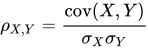
Pearson product-moment correlation coefficient

  • What does it measure? Only linear dependencies between the variables.
  • How it is obtained? By dividing the covariance of the two variables by the product of their standard deviations. (It is defined only if both of the standard deviations are finite and nonzero). \rho _{X,Y}={\frac {\operatorname {cov} (X,Y)}{\sigma _{X}\sigma _{Y}}}
  • Properties:
  1. ρ (X,Y) = +1 : perfect direct (increasing) linear relationship (correlation).
  2. ρ (X,Y) = -1 : perfect decreasing (inverse) linear relationship (anticorrelation).
  3. In all other cases, ρ (X,Y) indicates the degree of linear dependence between the variables. As it approaches zero there is less of a relationship (closer to uncorrelated).
  4. Only gives a perfect value when X and Y are related by a linear function.
  • When is it useful? For the case of a linear model with a single independent variable, the coefficient of determination (R squared) is the square of r, Pearson’s product-moment coefficient.


Spearman’s rank correlation coefficient:

  • What does it measure? How well the relationship between two variables can be described using a monotonic function (a function that only goes up or only goes down).
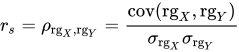
  • How it is obtained? Pearson correlation between the rank values of the two variables.

{\displaystyle r_{s}=\rho _{\operatorname {rg} _{X},\operatorname {rg} _{Y}}={\frac {\operatorname {cov} (\operatorname {rg} _{X},\operatorname {rg} _{Y})}{\sigma _{\operatorname {rg} _{X}}\sigma _{\operatorname {rg} _{Y}}}}}

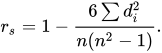
Only if all n ranks are distinct integers, it can be computed using the popular formula.

{\displaystyle r_{s}={1-{\frac {6\sum d_{i}^{2}}{n(n^{2}-1)}}}.}

Where di is the difference between the two ranks of each observation.

  • Properties:
  1. rs (X,Y) = +1:  X and Y are related by any increasing monotonic function.
  2. rs (X,Y) = -1:  X and Y are related by any decreasing monotonic function.
  3. The Spearman correlation increases in magnitude as X and Y become closer to being perfect monotone functions of each other.
  • When is it useful? It is appropriate for both continuous and discrete ordinal variables. It can be use for looking for non-linear dependence relationships.

Kendall’s tau coefficient

  • What does it measure? The ordinal association between two measured quantities.
  • How it is obtained?

{\displaystyle \tau ={\frac {({\text{number of concordant pairs}})-({\text{number of discordant pairs}})}{n(n-1)/2}}.}

Any pair of observations (xi , yi)  and (xj, yj) are said to be concordant if the ranks for both elements agree. That happens if xi-xj and yi-xj have the same sign. If their sign are different, they are considered as discordant pairs

  • Properties:
  1. τ (X,Y) = +1: The agreement between the two rankings is perfect (i.e., the two rankings are the same)
  2. τ (X,Y) = -1: The disagreement between the two rankings is perfect (i.e., one ranking is the reverse of the other)
  3. If X and Y are independent, then we would expect the coefficient to be approximately zero.
  • When is it useful? It is appropriate for both continuous and discrete ordinal variables. It can be use for looking for non-linear dependence relationships.

Distance correlation:

  • What does it measure? Both linear and nonlinear association between two random variables or random vectors.
  • How is it obtained? By dividing the variable’s distance covariance by the product of their distance standard deviations:

\operatorname {dCor}(X,Y)={\frac {\operatorname {dCov}(X,Y)}{{\sqrt {\operatorname {dVar}(X)\,\operatorname {dVar}(Y)}}}},

The distance covariance is defined as:

{\displaystyle \operatorname {dCov} _{n}^{2}(X,Y):={\frac {1}{n^{2}}}\sum _{j=1}^{n}\sum _{k=1}^{n}A_{j,k}\,B_{j,k}.}

Where:

{\displaystyle A_{j,k}:=a_{j,k}-{\overline {a}}_{j\cdot }-{\overline {a}}_{\cdot k}+{\overline {a}}_{\cdot \cdot },\qquad B_{j,k}:=b_{j,k}-{\overline {b}}_{j\cdot }-{\overline {b}}_{\cdot k}+{\overline {b}}_{\cdot \cdot },}

{\begin{aligned}a_{{j,k}}&=\|X_{j}-X_{k}\|,\qquad j,k=1,2,\ldots ,n,\\b_{{j,k}}&=\|Y_{j}-Y_{k}\|,\qquad j,k=1,2,\ldots ,n,\end{aligned}}

where || ⋅ || denotes Euclidean norm.

  • Properties:
  1. dCor (X,Y) = 0 if and only if the random vectors are independent.
  2. dCor (X,Y) = 1: Perfect dependence between the two distributions.
  3. dCor (X,Y) is defined for X and Y in arbitrary dimension.
  • When is it useful? It is appropriate to find any kind  dependence relationships between the 2 variables. Also if X and Y have different dimensions.

New avenues in antibody engineering

Hi everyone,

In this blog post I would like to review an unusual antibody scaffold that can potentially give rise to a new avenue in antibody engineering. Here, I will discuss a couple of papers that complement each others research.

My DPhil is centered on antibody NGS (Ig-seq) data analysis. I always map an antibody sequence to its structure as the three-dimensional antibody configuration dictates its function, the piece of information that cannot be obtained from just the nucleotide or amino acid sequence. When I work with human Ig-seq data, I bear in mind that antibodies are composed of two pairs of light and heavy chains that tune the antibody towards its cognate antigen. In the light of recent research discoveries, Tan et al., found that antibody repertoires of people that live in malaria endemic regions have adopted a unusual property to defend the body from the pathogen (1). Several studies followed up on this discovery to further dissect the yet uncharacterized property of antibodies.

Malaria parasites in the erythrocytic stage produce RIFIN proteins that are displayed on the surface of the erythrocytes. The main function of RIFINs is to bind to the LAIR1 receptors that are found on the surface on the immune cells. The LAIR1 receptor is inhibitory, which leads to inhibition of the immune system. The endogenous ligand of the LAIR1 receptor is collagen, which is found on the surface of body cells. This is to make sure that the immune cells will not be activated against its own body. Activating the LAIR1 receptors is one of the escape mechanisms that the malaria parasite has evolved.

Tan et al., (1) showed that in an evolutionary arms race between human and malaria, our immune system has harnessed the property of RIFINs to bind to LAIR1 against the parasite itself. By doing single B cell isolation and sequencing, it was discovered that antibodies, which are the effector molecules of our immune system, can incorporate the LAIR1 protein in its structure. Taking into account our knowledge of antibody engineering, the idea of incorporating a 100 amino acid long protein into antibody structure is very hard to comprehend. Sequences of these antibodies showed that the LAIR1 insertion was introduced to CDR-H3. Recently, the crystal structure of this construct has become available (2). The crystal structure revealed that the LAIR1 insertion indeed is structurally functional. All 5 of antibody canonical CDRs interact with the LAIR1 protein and its linkers to accommodate the insertion. The CDR-L3 forms two disulfide bonds with the liker to orientate the LAIR1 protein in the way, it will interact with RIFINs. It is worth to stress that LAIR1 sequence differs from the wild type, but the structure is very similar (<0.5 RMSD). The change in sequence and structure is crucial to prevent the LAIR1 containing antibody from interacting with collagen, but only with RIFINs.

Pieper et al., (3) tried to interrogate the modality of LAIR1 insertions into antibody structures. It was performed by single cell sequences as well as NGS of the antibody shift region. It turns out that human antibodies can accommodate two types of insertion modalities and can form   camelid-like antibodies. The insertion of LAIR1 can happen to CDR-H3, leading to the loss of antibody binding to its cognate antigen. Another modality is the incorporation of the LAIR1 protein to the shift region of the antibody. This kind of insertion does not interfere with the Fv domain binding properties, which leads to creating of  bi-specific antibodies. The last finding was the insertion of the LAIR1 into antibody structure where D, J and most of V genes, and the light chain were deleted. The resultant scaffold is structurally viable and only possesses the heavy chain. Hence, it is the evidence that human antibodies can also form camelid-like antibodies. Interestingly, these insertions into the shift region are not exclusive to people that live in malaria endemic regions. By doing NGS of the shift domain from European donors, around 1 in 1000 antibody sequences had an insertion of varying lengths. These insertions are introduced from different chromosomes of both intergenic and genic regions.

To sum up, it is very intriguing that our immune system has evolved to create camelid-like and bi-specific antibodies. It will be very informative to try to crystallize these structures to see how these antibodies accommodate the insertion of LAIR1. Current antibody NGS data analysis primarily concentrates on the heavy chain due to sequencing technology limitations. It will be invaluable information if we could sequence the entire heavy chain as well as adjacent shift region to see how our immune system matures and activates against pathogens.


  1. Tan J, Pieper K, Piccoli L, Abdi A, Foglierini M, Geiger R, Maria Tully C, Jarrossay D, Maina Ndungu F, Wambua J, et al. A LAIR1 insertion generates broadly reactive antibodies against malaria variant antigens. Nature (2016) 529:105–109. doi:10.1038/nature16450
  2. Hsieh FL, Higgins MK. The structure of a LAIR1-containing human antibody reveals a novel mechanism of antigen recognition. Elife (2017) 6: doi:10.7554/eLife.27311
  3. Pieper K, Tan J, Piccoli L, Foglierini M, Barbieri S, Chen Y, Silacci-Fregni C, Wolf T, Jarrossay D, Anderle M, et al. Public antibodies to malaria antigens generated by two LAIR1 insertion modalities. Nature (2017) 548:597–601. doi:10.1038/nature23670


Helpful resources for people studying therapeutic antibodies

My work within OPIG involves studying therapeutic antibodies. It can be tough to find information about these commercial molecules, often known by unintelligible developmental names until the later stages of clinical trials. Their structures are frequently absent, as one might expect, but even their sequences are sometimes a nightmare to get hold of! Below is a list of resources that I have found particularly helpful.

IDENTITIES OF RELEVANT ANTIBODIES

1. Wikipedia (don’t judge!) is an extremely helpful resource to get started. They have the following databases:

(a) A list of FDA-approved therapeutic monoclonal antibody therapies
(b) A more general list of therapeutic, diagnostic and preventive monoclonal antibodies (includes some things that have been withdrawn)

2. The Antibody Society has list of FDA/EU approved and antibodies to watch on their website. NB: This is only available to members of the society (free for students and other concessions, standard membership is $100pa).

3. The journal ‘mAbs’ also has a series of ‘Antibodies to Watch in [Year]’ papers. Here are the ones for 2016, 2017 and 2018.

SEQUENCES

4. 137 clinical-stage (post-phase I) mAb sequences can be found in the SI of this paper by Jain et al.

5. A slightly outdated (last updated Nov 2016), but still extremely useful, resource of antibody seqeunces is this FASTA list, written by Dr Martin’s Group at UCL.

SEQUENCES & STRUCTURES

6. The IMGT monoclonal antibody database (mAb-DB) has been possibly the most helpful resource. This includes 798 entries of both therapeutics and non-therapeutics, so it’s helpful to get a list of the antibodies you are interested in first. You can search it with a wide range of parameters, including antibody name. A typical antibody result will include its mAb-DB ID, INN details, common & developmental names, species, receptor type and isotype, sequence (via the “IMGT/2Dstructure-DB” link), target, clinical trials details and – if available – the 3D structure (via the “IMGT/3Dstructure-DB” link).

7. SAbDab has a continually-updated section for all therapeutic antibody structures deposited in the PDB.

CURRENT STATUS OF THE THERAPEUTIC

8. Search the therapeutic name on AdisInsight, or Pharmacodia to see its current clinical trial status, and whether or not it has been withdrawn.

Biophysical Society 62nd Annual Meeting

In February I was very fortunate to attend the Biophysical Society 62nd Annual Meeting, which was held in San Francisco – my first real conference and my first trip to North America. Despite arriving with the flu, I had a great time! The conference took place over five days, during which there were manageable 15-minute talks covering a huge range of Biophysics-related topics, and a few thousand more posters on display (including mine). With almost 6,500 attendees, it was also large enough to slip across the road to the excellent SF Museum of Modern Art without anyone noticing.

The best presentation of the conference was, of course, Saulo’s talk on integrating biological folding features into protein structure prediction [1]. Aside from that, here are a few more of my favourites:

Folding proteins from one end to the other
Micayla A. Bowman, Patricia L. Clark [2]

Here in the COFFEE (COtranslational Folding Family of Expert Enthusiasts) office, we love to talk about the vectorial nature of cotranslational folding and how it contributes to the efficiency of protein folding in vivo. Micayla Bowman and Patricia Clark have created a novel technique that will allow the effects of this vectorial folding to be investigated specifically in vitro.

The Clp complex grabs, unfolds and degrades proteins (diagram from [3]). ClpX, the translocase unit of this complex, was used to recapitulate vectorial protein refolding in vitro for the first time.

ClpX is an A+++ molecular motor that grabs proteins and translocates them through its pore. In vivo, its role is to denature substrates and feed them to an associated protease (ClpP) [3]. Bowman & Clark have used protein tags to initiate translocation of the target protein through ClpX, resulting in either N-C or C-N vectorial refolding.

The YKB construct used to demonstrate the vectorial folding mediated by ClpX (diagram from [4]).

They demonstrate the effect using YKB, a construct with two mutually exclusive native states: YK-B (fluoresces yellow) and Y-KB (fluoresces blue) [4]. In vitro refolding results in an equal proportion of yellow and blue states. Cotranslational folding, which proceeds in the N-C direction, biases towards the yellow (YK-B) state. C-N refolding in the presence of ClpX and ATP biases towards the blue (Y-KB) state. With this neat assay, they demonstrate that ClpX can mediate vectorial folding in vitro, and they plan to use the assay to investigate its effect on protein folding pathways and yields.

An ambiguous view of protein architecture
Guillaume Postic, Charlotte Perin, Yassine Ghouzam, Jean-Christope Gelly [Poster abstract: 5, Paper: 6]

This work addresses the ambiguity of domain definition by assigning multiple possible domain boundaries to protein structures. Their automated method, SWORD (Swift and Optimised Recognition of Domains), performs protein partitioning via the hierarchical clustering of protein units (PUs) [7], which are smaller than domains and larger than secondary structures. The structure is first decomposed into protein units, which are then merged depending on the resulting “separation criterion” (relative contact probabilities) and “compactness” (contact density).

Their method is able to reproduce the multiple conflicting definitions that often exist between domain databases such as SCOP and CATH. Additionally, they present a number of cases for which the alternative domain definitions have interesting implications, such as highlighting early folding regions or functional subdomains within “single-domain” structures.

Alternative SWORD domain delineations identify (R) an ultrafast folding domain and (S,T) stable autonomous folding regions within proteins designated single-domain by other methods [6]

Dual function of the trigger factor chaperone in nascent protein folding
Kaixian Liu, Kevin Maciuba, Christian M. Kaiser [8]

The authors of this work used optical tweezers to study the cotranslational folding of the first two domains of 5-domain protein elongation factor G.

In agreement with a number of other presentations at the conference, they report that interactions with the ribosome surface during the early stages of translation slows folding by stabilising disordered states, preventing both native and misfolded conformations. They found that the N-terminal domain (G domain) folds independently, while the subsequent folding of the second domain (Domain II) requires the presence of the folded G domain. Furthermore, while partially extruded, unfolded domain II destabilises the native G domain conformation and leads to misfolding. This is prevented in the presence of the chaperone Trigger factor, which protects the G domain from unproductive interactions and unfolding by stabilising the native conformation. This work demonstrates interesting mechanisms by which Trigger factor and the ribosome can influence the cotranslational folding pathway.

Optical tweezers are used to interrogate the folding pathway of a protein during stalled cotranslational folding. Mechanical force applied to the ribosome and the N-terminal of the nascent chain causes unfolding events, which can be identified as sudden increases in the extension of the chain. (Figure from [9])

Predicting protein contact maps directly from primary sequence without the need for homologs
Thrasyvoulos Karydis, Joseph M. Jacobson [10]

The prediction of protein contacts from primary sequence is an enormously powerful tool, particularly for predicting protein structures. A major limitation is that current methods using coevolution inference require a large multiple sequence alignment, which is not possible for targets without many known homologous sequences.

In this talk, Thrasyvoulos Karydis presented CoMET (Convolutional Motif Embeddings Tool), a tool to predict protein contact maps without a multiple sequence alignment or coevolution data. They extract structural and sequence motifs from known sequence-structure pairs, and use a Deep Convolutional Neural Network to associate sequence and structure motif embeddings. The method was trained on 137,000 sequence-structure pairs with a maximum of 256 residues, and is able to recreate contact map patterns with low resolution from primary sequence alone. There is no paper on this yet, but we’ll be looking out for it!


1. de Oliveira, S.H. and Deane, C.M., 2018. Exploring Folding Features in Protein Structure Prediction. Biophysical Journal, 114(3), p.36a.
2. Bowman, M.A. and Clark, P.L., 2018. Folding Proteins From One End to the Other. Biophysical Journal, 114(3), p.200a.
3. Baker, T.A. and Sauer, R.T., 2012. ClpXP, an ATP-powered unfolding and protein-degradation machine. Biochimica et Biophysica Acta (BBA)-Molecular Cell Research, 1823(1), pp.15-28.
Acta (BBA) – Molecular Cell Research, 2012, 1823 (1), 15-28
4. Sander, I.M., Chaney, J.L. and Clark, P.L., 2014. Expanding Anfinsen’s principle: contributions of synonymous codon selection to rational protein design. Journal of the American Chemical Society, 136(3), pp.858-861.
5. Postic, G., Périn, C., Ghouzam, Y. and Gelly, J.C., 2018. An Ambiguous View of Protein Architecture. Biophysical Journal, 114(3), p.46a.
6. Postic, G., Ghouzam, Y., Chebrek, R. and Gelly, J.C., 2017. An ambiguity principle for assigning protein structural domains. Science advances, 3(1), p.e1600552.
7. Gelly, J.C. and de Brevern, A.G., 2010. Protein Peeling 3D: new tools for analyzing protein structures. Bioinformatics, 27(1), pp.132-133.
8. Liu, K., Maciuba, K. and Kaiser, C.M., 2018. Dual Function of the Trigger Factor Chaperone in Nascent Protein Folding. Biophysical Journal, 114(3), p.552a.
9. Liu, K., Rehfus, J.E., Mattson, E. and Kaiser, C., 2017. The ribosome destabilizes native and non‐native structures in a nascent multi‐domain protein. Protein Science.
10. Karydis, T. and Jacobson, J.M., 2018. Predicting Protein Contact Maps Directly from Primary Sequence without the Need for Homologs. Biophysical Journal, 114(3), p.36a.

Dealing with indexes when processing co-evolution signals (or how to navigate through “sequence hell”)

Co-evolution techniques provide a powerful way to extract structural information from the wealth of protein sequence data that we now have available. These techniques are predicated upon the notion that residues that share spatial proximity in a protein structure will mutate in a correlated fashion (co-evolve). This co-evolution signal can be inferred from a multiple sequence alignment, which tells us a bit about the evolutionary history of a particular protein family. If you want to have a better gauge at the power of co-evolution, you can refer to some of our previous posts (post1, post2).

This is more of a practical post, where I hope to illustrate an indexing problem (and how to circumvent it) that one commonly encounters when dealing with co-evolution signals.

Most of the co-evolution tools available Today output pairs of residues (i,j) that were predicted to be co-evolving from a multiple sequence alignment. One of the main applications of these techniques is to predict protein contacts, that is pairs of residues that are within a predetermined distance (quite often 8Å).  Say you want to compare the precision of different co-evolution methods for a particular test set. Your test set would consist of a number of proteins for which the structure is known and for which sufficient sequence information is available for the contact prediction to be carried out. Great!

So you start with your target sequences, generate a number of contact predictions of the form (i,j) for each sequence and, for each pair, you check if the ith and jth residues are in contact (say, less than 8Å apart) on the corresponding known protein structure. If you actually carry out this test, you will obtain appalling precision for a large number of test cases. This is due to an index disparity that a friend of mine quite aptly described as “sequence hell”.

This indexing disparity occurs because there is a mismatch between the protein sequence that was used to produce the contact predictions and the sequence of residues that are represented in a protein structure. Ask a crystallographer friend if you have one, and you will find that in the process of resolving a protein’s structure experimentally, there are many reasons why residues would be missing in the final structure. More so, there are even cases where residues had to be added to enable protein expression and/or crystallisation. This implies that the protein sequence (represented by a fasta file) frequently has more (and sometimes fewer) residues than the proteins structure (represented by a PDB file).  This means that if the ith  and jth residues in your sequence were predicted to be in contact, that does not mean that they correspond to the ith and jth residues in order of appearance in your protein structure. So what do we do now?

A true believer in the purity and innocence of the world would assume that the SEQRES entries in your PDB file, for instance, would come to the rescue. The SEQRES describes the sequence of residues exactly as they appear on the atom coordinates of a particular PDB file. This would be a great way of mitigating the effects of added or altered residues, and would potentially mitigate the effects of residues that were not present in the construct. In other words, the sequences described by SEQRES would be a good candidate to validate whether your predicted contacts are present in the structure. They do, however, contain one limitation. SEQRES also describe any residues whose coordinates were missing in the PDB. This means that if you process the PDB sequentially and that some residues could not be resolved, the ith residue to appear on the PDB could be different to the ith residue in the SEQRES.

An even more innocent person, shielded from all the ugliness of the the universe, would simply hope that the indexing on the PDB is correct, i.e. that one can use the residue indexes presented on the “6th column” of the ATOM entries and that these would match perfectly to the (i,j) pair you obtained using your protein sequence. While, in theory, I believe this should be the case, in my experience this indexing is often incorrect and more frequently than not, will lead to errors when validating protein contacts.

My solution to the indexing problem is to parse the PDB sequentially and extract the sequence of all the residues for which coordinates are actually present. To my knowledge, this is the only true and tested way of obtaining this information. If you do that, you will be armed with a sequence and indexing that correctly represent the indexing of your PDB. From now on, I will refer to these as the PDB-sequence and PDB-sequence indexing.

All that is left is to find a correspondence (a mapping) between the sequence you used for the contact prediction and the PDB-sequence. I do that by performing a standard (global) sequence alignment using the Needleman–Wunsch algorithm. Once in possession of such an alignment, the indexes (i,j) of your original sequence can be matched to adjusted indexes (i',j') on your PDB-sequence indexing. In short, you extracted a sequential list of residues as they appeared on the PDB, aligned these to the original protein sequence, and created a new set of residue pairings of the form (i',j') which are representative of the indexing in PDB-sequence space. That means that the i’th residue to appear on the PDB was predicted to be in contact with the j’th residue to appear.

The problem becomes a little more interesting when you hope to validate the contact predictions for other proteins with known structure in the same protein family. A more robust approach is to use the sequence alignment that is created as part of the co-evolution prediction as your basis. You then identify the sequence that best represents the PDB-sequence of your homologous protein by performing N global sequence alignments (where N is the number of sequences in your MSA), one per entry of the MSA. The highest scoring alignment can then be used to map the indexing. This approach is robust enough that if your homologous PDB-sequence of interest was not present in the original MSA for whatever reason, you should still get a sensible mapping at the end (all limitations of sequence alignment considered).

One final consideration should be brought to the reader’s attention. What happens if, using the sequence as a starting point, one obtains one or more (i,j) pairs where either i or j is not resolved/present in the protein structure? For validation purposes, often these pairs are disregards. Yet, what does this co-evolutionary signal tell us about the missing residues in the structure? Are they disordered/flexible? Could the co-evolution help us identify low occupancy conformations?

I’ll leave the reader with these questions to digest. I hope this post proves helpful to those braving the seas of “sequence hell” in the near future.